
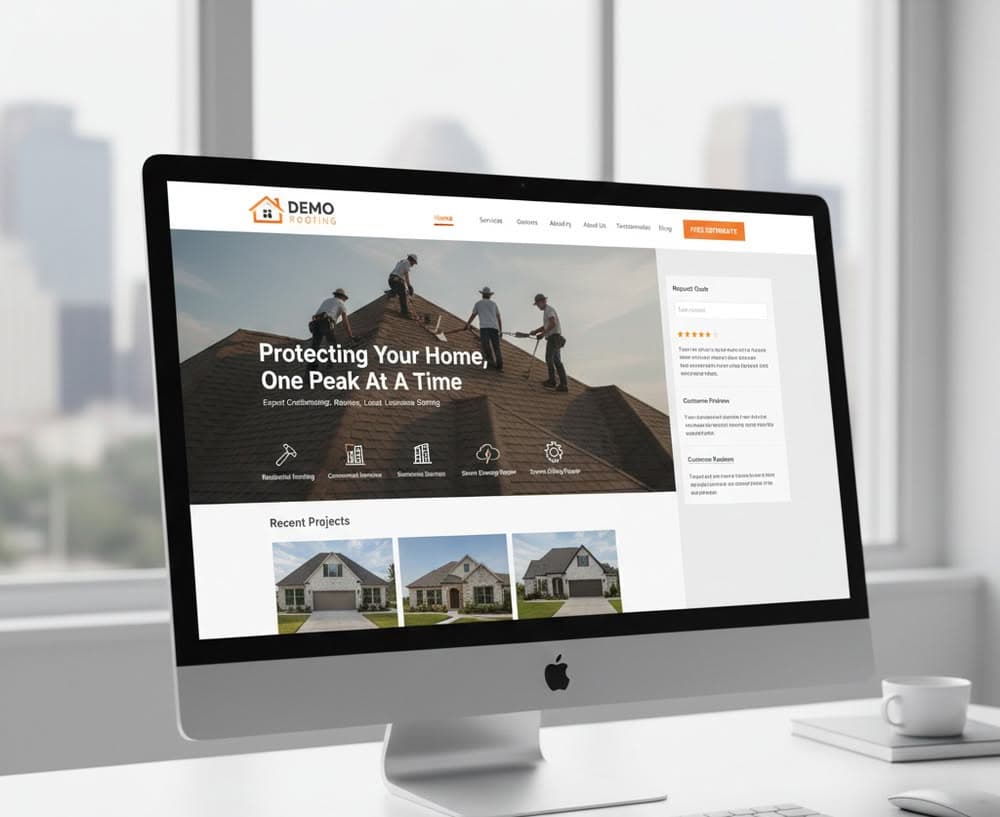
Did you know that nearly 70% of small businesses fail due to poor website design? For roofing contractors, a strong online presence is crucial for survival. Our team has spent years helping construction businesses succeed online. We’ve learned that having the right roofing website features is essential for building a successful business.
Forget everything you think you know about websites. Your website needs to be more than just visually appealing; it needs to be functional and optimized to meet your business goals. It is about transforming your site into a lead generating machine that delivers real results, converting casual visitors into loyal, paying customers. With our extensive experience in the roofing industry, our team have identified the key components that drive customer engagement and conversions. We have seen firsthand what works and what does not, and this guide shares our expertise to help you build a roofing services website that truly delivers.
While aesthetics are important, a modern and well designed website immediately builds trust and credibility. A website is often the first interaction a potential client has with your roofing business, so if your website does not clearly demonstrate your competence and ease of use, potential clients will likely seek services elsewhere. Potential clients are often stressed about a leak or roof damage and are seeking a dependable, honest and responsive roofing contractor, so your website needs to convey these qualities quickly and effectively.
Must Have Website Features
Clear Value Proposition
Within seconds of landing on your site, visitors should understand what you offer and what sets you apart from your competitors. Ditch the industry jargon and confusing language and be direct, addressing their specific needs. Instead of saying, “We deliver superior roofing solutions,” try something like, “Protect Your Home with Expert Roofing Services.” Make sure that critical details are easily accessible, preventing visitors from having to search to understand how you can help them. Highlight your unique selling points above the fold, ensuring they are immediately visible.
Mobile First Design
A mobile first design is not optional; it is a necessity. Most of your website traffic will come from smartphones, so if your website is not optimized for mobile devices, you risk creating a frustrating user experience and losing potential clients. Responsive design adapts to different screen sizes, ensuring your website looks and functions flawlessly on any device. Test your website regularly on various devices to ensure responsiveness, paying close attention to image sizes, button placement and text readability on smaller screens.
High Quality Visuals
Roofing might not be the most glamorous industry, but your website can still be visually appealing. Invest in professional photos showcasing your completed projects, team and equipment. Before and after photos are particularly effective in demonstrating the quality of your work, and videos are even more engaging. We suggest adding a short video introducing your company, describing your services or highlighting a recent project. Drone footage of a newly installed roof can be visually stunning. Ensure all images and videos load quickly to avoid impacting website speed.
Prominent Calls to Action (CTAs)
Every page of your website should feature a clear call to action, guiding visitors toward the desired outcome. Do you want them to request a quote, schedule an inspection or call for emergency assistance? Make the desired action obvious and easy to complete using action oriented language and eye catching buttons. Some examples include: “Get a Free Estimate,” “Schedule Your Inspection Now” and “Call Us for Emergency Service.” Place CTAs strategically throughout your website, particularly near the top and bottom of each page.
Easy to Find Contact Information
Even though it seems obvious, many websites make it difficult to find contact information. Your phone number, email address and physical address (if applicable) should be prominently displayed on every page, ideally in the header or footer. A dedicated contact page with a form is also essential. Make it as easy as possible for potential clients to reach you because the more difficult it is, the more likely they are to turn to a competitor.
Client Testimonials and Reviews
Customer feedback is invaluable, as potential clients want assurance that others have had positive experiences with your company. Displaying customer testimonials on your website builds trust and credibility, so ask for testimonials from satisfied clients and showcase reviews from platforms like Google, Yelp and Facebook. Respond to both positive and negative reviews promptly and professionally to demonstrate your commitment to customer satisfaction.
Service Area Pages
If you serve multiple geographic areas, create dedicated service area pages for each one. This helps you target local searches and improve your visibility in search results. Each service area page should include specific details about the services you provide in that area, along with relevant local landmarks. If you serve both Austin and Lakeway, create separate pages targeting “Roofing Austin TX” and “Roofing Lakeway TX.”
Informative Blog Content
A blog is a powerful tool for attracting visitors to your website, establishing your industry expertise and boosting your search engine rankings. Write about topics relevant to your target audience, such as: “How to Spot Roof Damage After a Storm,” “The Advantages of Different Roofing Materials” and “What to Expect During a Roof Replacement.” Create useful, informative content that answers questions and addresses concerns, solidifying your position as a trusted authority.
Secure Socket Layer (SSL) Certificate
An SSL certificate encrypts data transmitted between your website and a visitor’s browser, protecting sensitive information such as contact form submissions and payment details. Google prioritizes websites with SSL certificates, making it essential for search engine optimization. Verify the presence of the padlock icon in your website’s address bar because if it is missing, an SSL certificate has not been installed.
Fast Loading Speed
Website speed significantly impacts user experience and search engine optimization. Visitors expect websites to load quickly, and they will abandon slow loading sites. Google penalizes slow websites in its search rankings, so optimize your images, minimize your code and utilize a content delivery network (CDN) to improve your website’s loading speed. Tools like Google PageSpeed Insights can help identify areas for improvement.
Accessibility
Make sure your website is accessible to all users, including individuals with disabilities. Provide alternative text for images, use proper heading tags and ensure easy keyboard navigation. Accessibility is not only ethically responsible but can also improve your search engine optimization and broaden your audience reach.
Lead Capture Forms
Never allow visitors to leave your website without an opportunity to become a lead. Integrate lead capture forms, offering valuable incentives in exchange for their contact information. Offer a free inspection, a downloadable guide or a discount on their initial service, but keep the forms concise and simple, requesting only essential information. Too many fields can deter visitors from completing the form.
Chatbots
A chatbot can provide immediate support to website visitors, answering questions and guiding them through the buying process. This is particularly valuable in emergency roofing situations where clients require prompt assistance. Utilize a chatbot to handle frequently asked questions and escalating more complex issues to a live agent, but make sure your chat feature is available during business hours and that inquiries are addressed promptly.
Financing Options
Roofing projects can be expensive, and many homeowners may require financing to afford them. If you offer financing options, highlight them prominently on your website. Provide detailed information about available plans and the application process because this can make your services more accessible to a wider range of clients and increase your sales.
Customer Relationship Management (CRM) Integration
Integrating your website with your CRM system streamlines lead management and enhances marketing efforts. This enables automatic lead capture from your website, tracking of user interactions and personalized email marketing campaigns. This ensures that no lead is overlooked and that each potential client receives a tailored experience.
Search Engine Optimization (SEO) Considerations
While an attractive and functional website is essential, it is only the start. To attract new clients, your website must be optimized for search engines.
Keyword Research
Identify the keywords your target audience uses to search for roofing services. Use tools like Google Keyword Planner, Semrush, or Ahrefs to identify relevant keywords that have high search volume and low competition. Target both broad keywords (for example, “roofing contractor”) and long tail keywords (for example, “roof repair services in Austin TX”).
On Page Optimization
Optimize your website’s content and HTML code for your target keywords. Use keywords in your page titles, meta descriptions, headings, and body text. Optimize image alt tags and maintain a logical website structure.
Local SEO
Roofing is a local business, so local SEO is critical. Claim and optimize your Google Business Profile listing, get listed in local directories, and build local citations by having your business name, address, and phone number mentioned on other websites. Encourage clients to leave reviews on your Google Business Profile listing.
Link Building
Acquiring high quality backlinks from other websites can improve your search engine rankings. Focus on building links from authoritative websites within your industry and local websites in your area. Guest blogging, resource link building and broken link building are all effective strategies.
Analytics and Tracking
Continuous improvement requires measurement. Install Google Analytics on your website and track key metrics such as website traffic, bounce rate, conversion rate and lead generation. This data will provide insights into what is working and what is not, enabling you to make data driven decisions to enhance your website’s performance. Monitor your website’s analytics regularly and make adjustments as needed because website optimization is an ongoing process.
Your website is a vital asset for your roofing business. By prioritizing these essential roofing website features, optimizing for search engines and tracking your results, you can build a powerful online presence that attracts new clients and drives revenue. Think of your website as your most valuable marketing tool.
We have seen firsthand how a well designed and optimized website can transform a roofing company’s success. It is all about having the right website with the right features.
By implementing these strategies, you will be well on your way to creating one of the best roofing websites in your area and securing your company’s future.